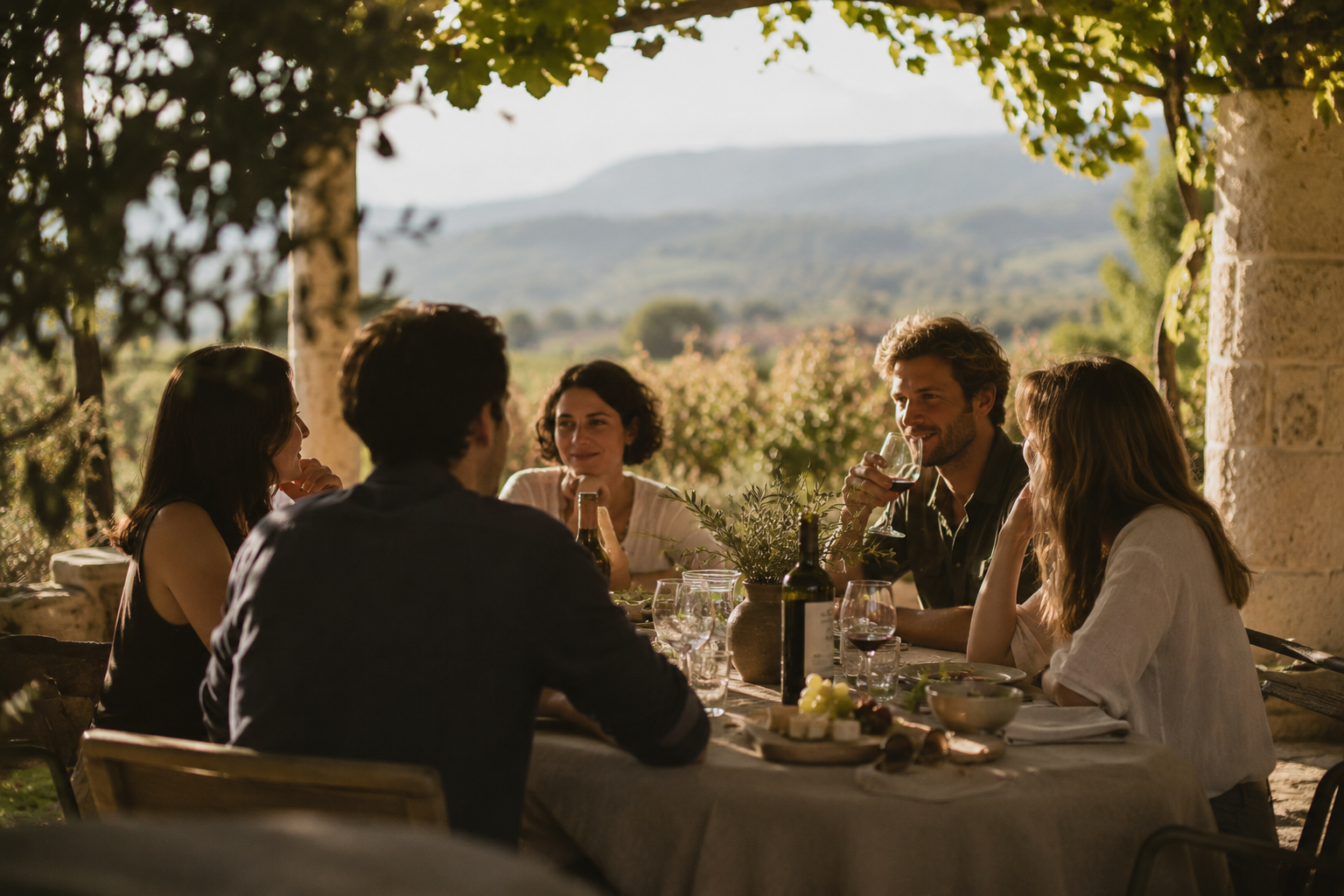
“The meal is over, but no one gets up. The glasses are empty, or almost. The light begins to shift, quietly announcing the evening. Time moves without being noticed, slipping gently through your hands. Someone says something that makes everyone laugh, and you realise you don’t want this moment to end. And then it hits you: this is what mattered. Not the food. This. Stillness, ease, and the quiet happiness of small things, of simple moments.”
At Salvia y Limón, Sobremesa is not the end of the experience — it is the moment when everything comes together
Sobremesa is one of those words that cannot truly be translated, because it does not describe a thing, but a way of being. It literally means “over the table,” yet its meaning begins precisely when the meal ends. It is that unhurried time that follows, where conversation flows naturally, laughter comes easily, and the focus shifts from the food to the people.
It is not a habit. It is a choice. The choice to stay a little longer, without looking at the clock. To have a coffee, a glass of wine, or simply remain there, allowing the moment to hold itself. These are experiences that feel suspended in time.
Where sobremesa exists, it takes on the character of the place. In Spain, it is almost a daily ritual, especially on weekends, where conversations stretch for hours over coffee, digestifs, and topics that move effortlessly between the trivial and the meaningful. It also plays a role in everyday working lunches, where decisions, agreements and relationships are quietly shaped.
In Argentina and Uruguay, sobremesa often unfolds around mate, a continuous gesture of sharing that extends naturally, especially during long barbecues where time seems to dissolve. In Italy, the pause gathers around an espresso or a digestif — perhaps shorter, but equally centred on companionship. In Mexico and much of Latin America, sobremesa carries the warmth of family life: long, effortless conversations over coffee or something sweet, without anyone calling for them or bringing them to an end.
Beyond these cultures, the relationship with time at the table shifts. In places like the United States or Northern Europe, meals tend to be more functional, and time spent afterwards is shorter, shaped by efficiency rather than conversation. In Asia, dining is often more structured and ritualised, leaving less space for extended conversation. Even in France, where food is deeply valued, conversation is more integrated within the meal itself rather than lingering long after it.
These differences are not accidental. They reflect different ways of understanding time and human connection. And in those places where sobremesa holds meaning, it is more than a custom — it is a way of valuing what is shared.
There is also something deeply cultural in how it is experienced: no one rushes you, no one brings the bill unless you ask. The table becomes an open space where stories, debates and comfortable silences all have a place. It is time without apparent productivity, yet full of meaning.
Today, this gesture has become increasingly rare. Between full schedules, screens and constant demands, finding the space to sit without hurry with friends or family has become a quiet luxury. And at the same time, a reminder of something essential: that many of life’s most meaningful conversations do not happen in formal meetings or quick messages, but around a table when no one feels the need to leave.
At Salvia y Limón, Sobremesa is not the end of the experience — it is the moment when everything comes together. When the place, the food and the people merge into something that cannot be forced, but when it happens, stays with you.
We simply create the conditions for that moment to exist.
Sobremesa is not just a tradition. It is a way of understanding life.
Have you experienced it?

Leave a Reply