
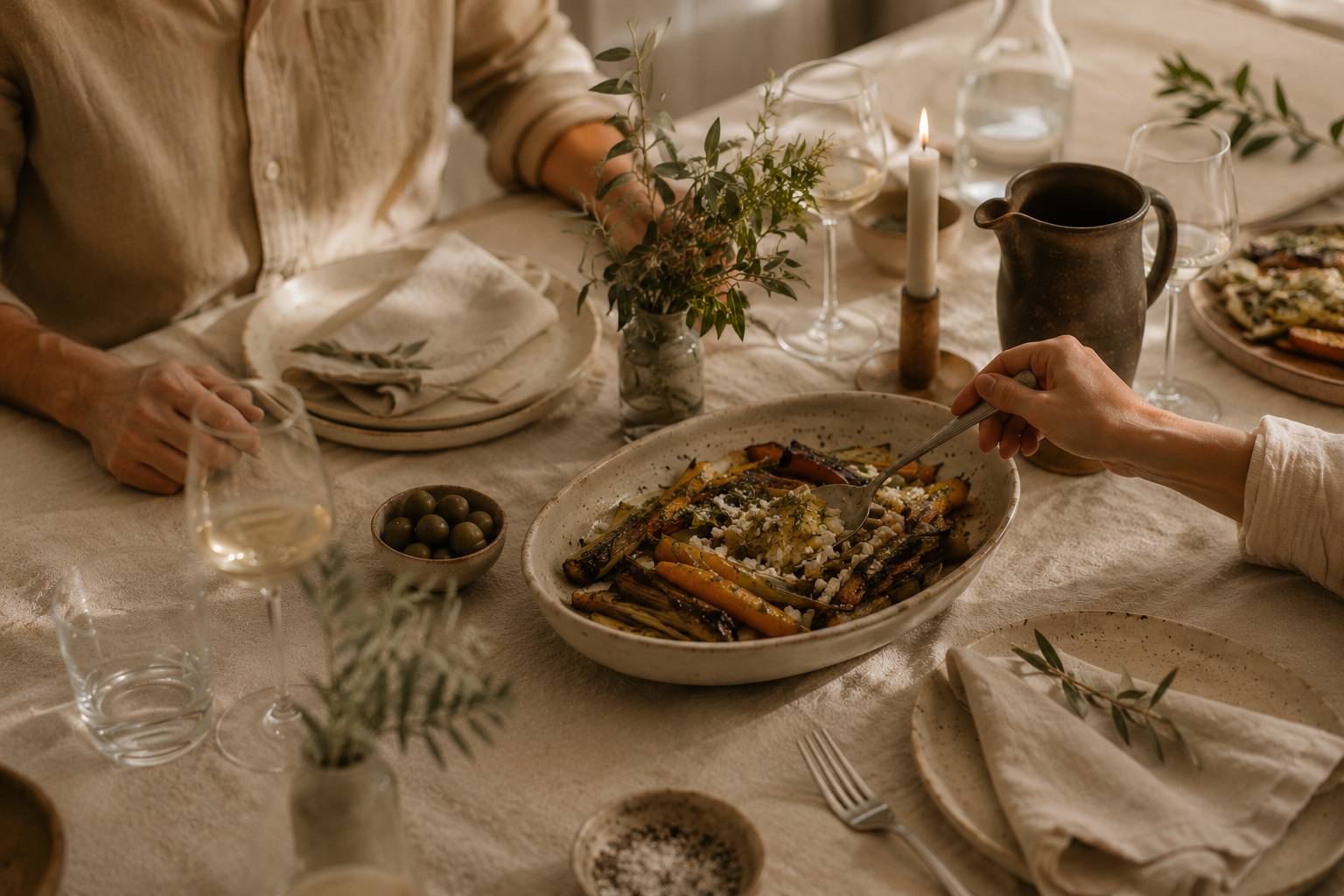
There is a quiet beauty in simple food.
Not because it asks for less effort, but because it asks for something far more valuable: attention. A handful of ripe tomatoes, good olive oil, fresh herbs, a loaf of bread still warm from the oven—these ingredients don’t need disguises. They simply need time and people willing to gather around them.
The most memorable meals are rarely the most elaborate. We remember conversations more than complicated techniques, laughter more than perfect plating. A pot of slow-cooked pasta sauce, a large salad passed from hand to hand, roasted vegetables straight from the oven or a generous bowl of beans can feed far more than our appetite.
Simple recipes have another gift: they leave space for everyone. No one feels intimidated by them. Guests naturally wander into the kitchen, someone slices bread, another pours wine, someone else tastes the sauce and declares it needs just a little more salt. Cooking becomes something shared rather than performed.
Long tables are built this way—not with luxury, but with generosity. They invite neighbours, old friends, unexpected guests and children who steal olives before dinner. They remind us that hospitality is less about impressing people than making them feel they belong.
Perhaps that’s why the recipes we return to, year after year, are often the simplest ones. They become traditions not because they are extraordinary, but because they create the conditions for something extraordinary to happen around them.
Cook simply.
Set a long table.
Let the people around it do the rest.